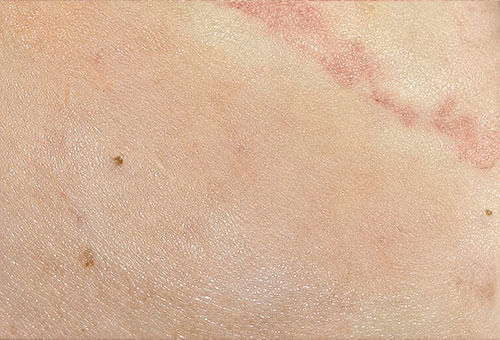

Radiation therapy is a non-surgical treatment option used for select skin cancers when surgery may not be ideal or preferred.
DermRay radiation therapy delivers focused, controlled energy to destroy cancer cells while preserving surrounding healthy tissue, making it a valuable option for specific patients and treatment areas.

Central Valley Skin Specialists offers Image-Guided Superficial Radiation Therapy (IG-SRT). IG-SRT is a gold standard in the treatment of non-melanoma skin cancer, typically offering a 98-99% cure rate with excellent cosmetic outcomes. 1 This treatment requires no needles or incisions, making the procedure gentler and more comfortable than surgery. Contact us to see if you are a candidate for this treatment.
Central Valley Skin Specialists is now offering Image-Guided Superficial Radiation Therapy (IG-SRT) for patients with basal and squamous cell skin cancers. IG-SRT is a gentle, non-surgical treatment for non-melanoma skin cancer that uses low-dose, targeted radiation to treat only the skin's surface. With advanced imaging technology, the doctor can precisely locate and treat the cancerous cells while preserving healthy surrounding tissue. IG-SRT has a 98-99% cure rate, leaves no surgical scars, and allows you to continue your normal daily activities after treatment. 1 It’s often recommended for patients wanting a non- invasive option with excellent cosmetic results.
Treatment Options
Superficial Radiation Therapy (SRT) Image-guided SRT uses low-level, targeted radiation to treat basal cell carcinoma and squamous cell carcinoma. Treatment is delivered in a series of short, painless in-office sessions, allowing cancer cells to be destroyed gradually without the need for surgical excision.
Non-Surgical Alternative to Surgery Radiation therapy may be recommended for patients who are not ideal surgical candidates due to medical conditions, age, anticoagulant use, or personal preference. It is also commonly used for cosmetically sensitive areas where surgery may be more complex.
Organ and Tissue Preservation Approach DermRay treatment focuses radiation precisely on the affected area to minimize impact on surrounding healthy skin. This approach helps preserve cosmetic appearance and maintain normal skin function.
Treatment Planning & Mapping Before treatment begins, a detailed assessment is performed to determine lesion depth, size, and location. A customized treatment plan is then created to ensure accurate dosing and optimal results.
Follow-Up & Skin Monitoring After completion of therapy, patients are closely monitored to ensure proper healing and to check for any recurrence or new lesions. Ongoing skin cancer surveillance remains an important part of long-term care.
What to expect
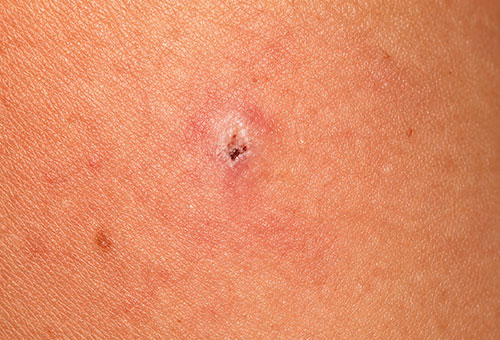
Pre-Treatment
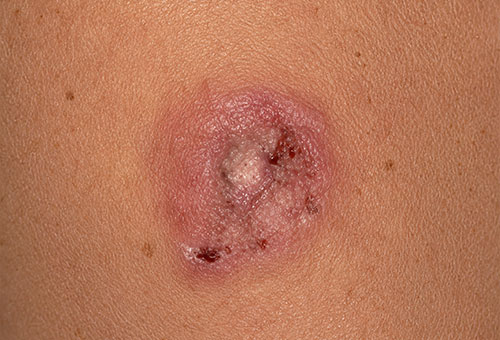
During Treatment
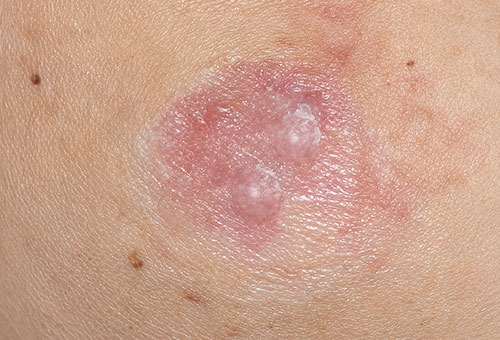
Last Day of Treatment