



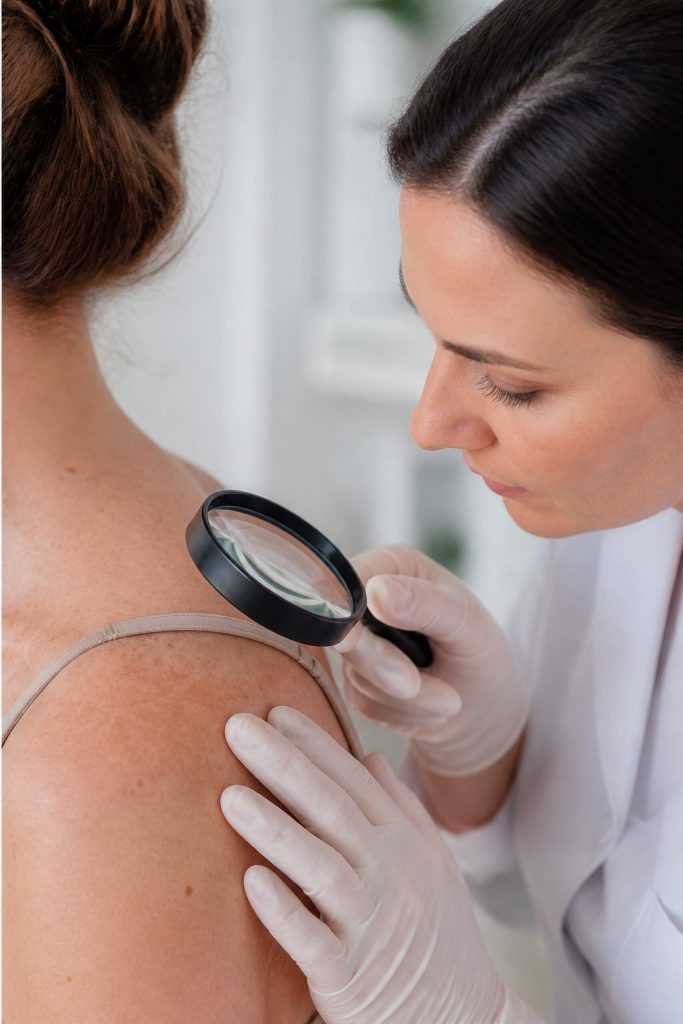
Skin cancer is one of the most common forms of cancer, but when detected early, it is highly treatable. Routine skin cancer screenings can help identify suspicious moles, lesions, or skin changes before they progress, supporting healthier long-term outcomes.
Symptoms & Causes
You may benefit from a professional skin cancer screening if you notice:
- New or changing moles
- Irregularly shaped or discolored spots
- Sores that do not heal
- Itching, bleeding, or crusting lesions
- Changes in skin texture or pigmentation
Risk factors may include prolonged sun exposure, tanning bed use, fair skin, a history of sunburns, family history of skin cancer, or a personal history of abnormal moles or skin cancer.
Dr. Amin Esfahani, MD, Board-Certified Dermatologist, and the team at Central Valley Skin Specialists provide personalized evaluations and evidence-based treatment recommendations for patients throughout the Central Valley.
Treatment Options
Depending on your screening results, treatment recommendations may include:
- Full-body skin examinations
- Mole and lesion evaluation
- Skin biopsies for further analysis
- Cryotherapy for precancerous lesions
- Ongoing skin monitoring and prevention guidance
- Personalized treatment planning if skin cancer is detected